
Crawl Space Vapor Barrier
One of the main reasons mold grows in a crawl space is because of the moisture emitted from the ground under the home. A crawl space vapor barrier reduces the moisture that rises into the crawl space.
The N.C. Building code requires that any “vented” crawl space has at least a 6-mil plastic covering the ground, and it must overlap at the seams at least 12 inches.
Homeowners in Charlotte, Winston Salem, and Hickory areas can trust Dry Otter Waterproofing for premium vapor barrier installation. So if you need a crawl space barrier… “You Otter Get Dry!”
Get Your Free Inspection
Takes 30 seconds. We'll call to schedule.
"*" indicates required fields
What is a crawl space vapor barrier?
A crawl space vapor barrier is a sheet of plastic installed over the soil in a crawl space. Its used is to block moisture vapor from rising out of the ground and entering the crawl space air. This helps prevent mold, wood rot, and humidity damage. Vapor barriers are sometimes referred to by brand names like Visqueen, or described as crawl space liners or underlayment.
How thick is a vapor barrier installed by Dry Otter?
Dry Otter installs black plastic that is 10mil thick. Plastic sheeting is measured in mils.
A mil is a measurement that equals one-thousandth of an inch, or 0.001 inch.
One mil also equals 0.0254 mm (millimeter). A mil is not the same thickness as a millimeter. “mil” is not an abbreviation but a unit of measure.
What are the steps to install a vapor barrier?
Installing a crawl space vapor barrier involves the following steps:
- Clean the crawl space and prepare the materials.
- Roll out the vapor barrier.
- Stake down the vapor barrier to the edges of the crawl space.
What are the benefits of a vapor barrier?
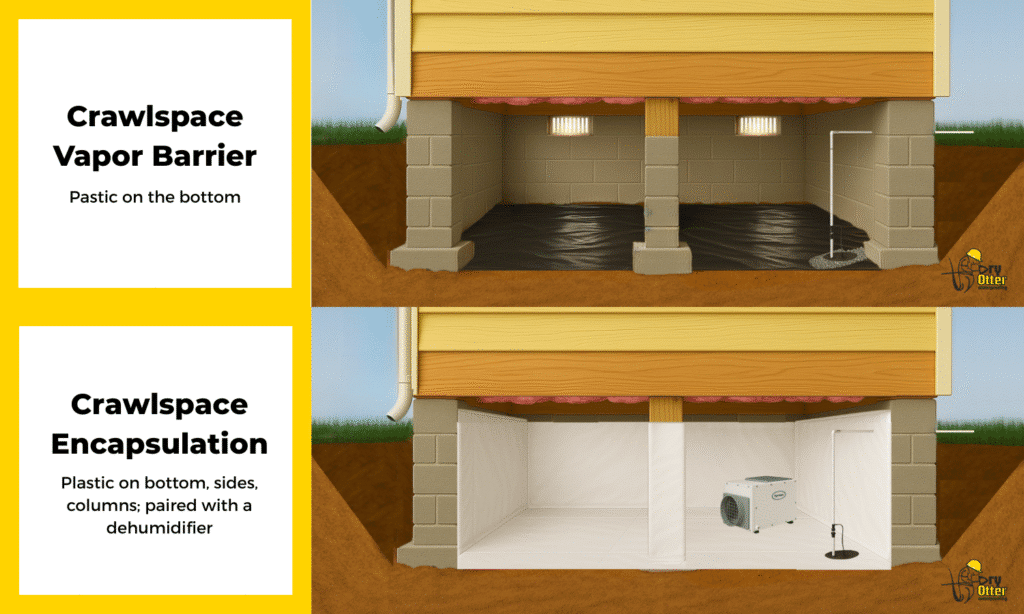
A plain vapor barrier on the crawl space floor alone is less beneficial than a complete encapsulation. Still, a crawl space vapor barrier can reduce the moisture from the soil into the wooden parts of the foundation.
According to the U.S. Environmental Protection Agency (EPA), up to 50% of the air on your first floor comes from your crawl space. That means any moisture, mold, or contaminants below your home can affect the air you breathe every day, making vapor barrier protection not just one of structural importance, but of health importance too.
Related Articles You Otter Read
What are the signs you need a vapor barrier
- Musty odors
- Visible condensation on crawl space surfaces
- Warped hardwood floors
- Mold or mildew on joists or insulation
- High indoor humidity levels
- Increased allergy or respiratory issues
- Pest infestations
- Cold floors
- Wet Insulation
What are the dangers of a humid crawl space
- Mold and mildew growth
- Wood rot and structural damage
- Increased energy costs
- Poor indoor air quality
- Pest Infestations
How much does does vapor barrier installation cost?
The cost to install a crawl space vapor barrier typically ranges from $1,200 to $4,000, depending on several factors:
- Size (square footage) of the crawl space
- Height of a the crawl space
- Type and thickness of the vapor barrier
- Condition of the crawl space
Frequently Asked Questions
How much does it cost to install a vapor barrier in a crawl space?
The cost to install a crawl space vapor barrier typically ranges from $1,200 to $4,000, depending on several factors:
Size (square footage) of the crawl space
Height of a the crawl space
Type and thickness of the vapor barrier
Condition of the crawl space
How long does it take to install a crawl space vapor barrier?
Most waterproofing jobs can be completed in just a few days. During your inspection, we’ll walk you through the process so you’ll know exactly what to expect. We believe in clear communication and on-time service, so we’ll keep you informed every step of the way. No surprises, just solid results.
How long does a vapor barrier last?
Vapor barriers typically last 20 years or more, depending on the material and installation conditions. If water intrusion is not addressed though before the vapor barrier installation, the water can push the vapor barrier out of place.
Crawl Space Vapor Barrier Case Study
- Vickie
- Crawl Space Waterproofing
- Crawl Space Vapor Barrier
- Lincolnton, NC
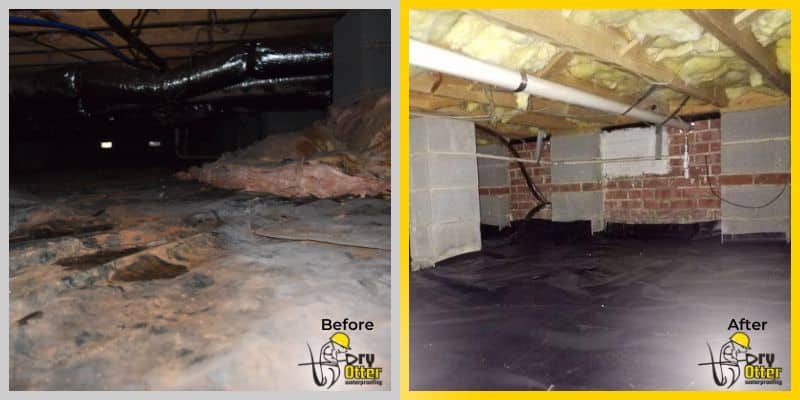
Vickie called Dry Otter when her termite company let her know they found moisture and mold issues in the crawl space.
We inspected the crawl space and also identified mold and high moisture levels. He offered two ways to address the mold. One way is to clean the mold and replace the insulation. Then, install a full encapsulation of the crawlspace to seal the vents. Additionally, we would add plastic vapor barrier, also known as a liner, on the floor and the walls, with a dehumidifier to remove the moisture.
This solution would ensure the crawlspace was a poor environment for mold to grow back. Vickie chose to remove the insulation, clean the mold in the crawlspace, add a vapor barrier on the ground only to keep the moisture from coming up from the soil under the home, and replace the insulation.
Noah’s crew completed the job to provide Vickie with a mold free crawlspace, and a traditional vapor barrier for a vented crawl space.
More Case Studies
What Our Customers Are Saying


 Trustindex verifies that the original source of the review is Google.
 Trustindex verifies that the original source of the review is Google.
 Trustindex verifies that the original source of the review is Google.
 Trustindex verifies that the original source of the review is Google.
 Trustindex verifies that the original source of the review is Google.
 Trustindex verifies that the original source of the review is Google.
 Trustindex verifies that the original source of the review is Google.
 Trustindex verifies that the original source of the review is Google.
 Trustindex verifies that the original source of the review is Google.










Schedule Your Free Inspection
Our process includes the following inspections:
Crawl Space Inspection:
- Moisture and Water Damage
- Mold and Fungus
- Insulation Condition
- Vapor Barrier
- Structural Issues
- High Humidity
- Condensation on Ducts
Basement Inspection:
- Water Intrusion
- Cracks and Wall Leaks
- Foundation Integrity
- Sump Pump Operation
- Mold and Mildew
- Basement Floor Cracks
- Hydrostatic Pressure
Our expert will personally visit your home and examine the issues you are having with your basement or crawl space foundation.
Our Service Area
Crawl Space and basements Inspections available in these areas and more!
